
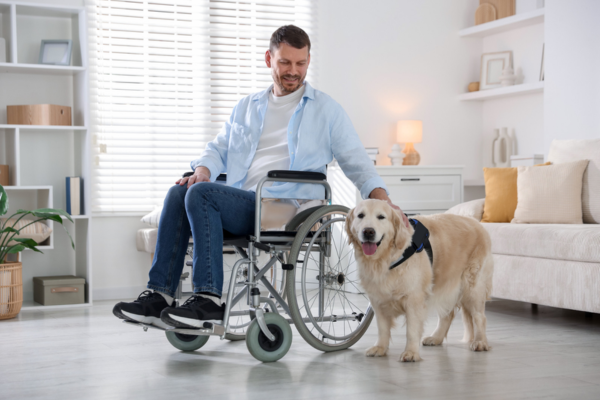
For most people, a trip to the grocery store or a quick stop for coffee is routine. But for individuals who rely on service dogs, these everyday moments can become unpredictable, stressful, and even unsafe. This is not because of their disability, but because of how others respond to their working partner.
Misunderstandings about service dogs occur frequently. While they may seem small in the moment, a quick question, a friendly distraction, a moment of curiosity, the impact…it adds up. Over time, these interactions create real barriers to independence, dignity, and safety for service dog handlers.
Service Dogs Are Not Pets. They Are Essential Partners
One of the most common misconceptions is that service dogs are simply well-behaved pets. In reality, they are highly trained working partners who perform essential, often life-saving tasks.
These tasks can include:
- Providing mobility support and balance
- Alerting to medical conditions such as seizures or blood sugar changes
- Interrupting psychiatric episodes
- Guiding individuals with visual impairments
- Retrieving items or assisting with daily tasks
Every moment a service dog is working, it is focused on its handler’s needs. When that focus is broken, even for a moment, it can have serious consequences.
The Danger of Distractions
Many people see a service dog and instinctively want to interact, make eye contact, speak to them, or offer a quick pet. It often comes from a good place, but for a working dog, this is not harmless.
Distractions can:
- Interrupt a critical alert or task
- Cause the dog to miss subtle cues from their handler
- Increase stress for both the dog and the handler
- Put the handler in a vulnerable or unsafe situation
Imagine relying on your service dog to help you maintain balance or alert you to a medical episode, and someone unintentionally pulls their attention away at the wrong moment. What seems like a small interaction can quickly become a huge safety risk!
The Emotional Toll of Being Questioned
Another common experience for service dog handlers is being questioned in public spaces.
“Is that a real service dog?”
“What’s your disability? You don’t look disabled.”
“Do you have papers for that dog?”
These questions are not just uncomfortable, they’re invasive! They force individuals to justify their presence, often requiring them to navigate confrontation while simply trying to go about their day.
Over time, this creates:
- Anxiety about leaving home
- Emotional exhaustion from repeated interactions
- A sense of being constantly scrutinized or judged
- Pressure to disclose private medical information
No one should have to defend their right to exist in public spaces.
When Access is Denied
Perhaps the most serious consequence of misunderstanding service dogs is the denial of access.
Despite laws protecting the rights of service dog handlers, many are still turned away from restaurants, stores, hotels, and other public places. This often stems from a lack of education: not malice, but misunderstanding. However, the impact is the same.
Denied access can mean:
- Missing important appointments
- Being unable to access essential services
- Experiencing public humiliation
- Losing trust in businesses and communities
It sends a clear message: you are not welcome here. And for many handlers, that message is heard far too often.
A Loss of Freedom
Individually, these moments may seem minor. But together, they create a pattern that limits freedom.
Handlers begin to:
- Avoid certain places
- Change their routines
- Prepare for conflict before leaving home
- Feel isolated from their communities
This is the hidden cost of misunderstanding service dogs. It’s not just about inconvenience; it’s about restricting independence and diminishing quality of life.
Education Changes Everything
The good news is that these challenges are preventable.
Most negative interactions happen because people simply don’t know what a service dog is or how to behave around one. With the right service dog education, communities can shift from being a source of stress to a source of support.
Simple changes make a powerful difference:
- Do not distract or interact with a working service dog
- Speak to the handler, not the dog
- Respect personal space and boundaries
- Understand that service dogs are not required to have visible documentation
- Recognize that disabilities are not always visible
When people understand these basics, they help create safer, more inclusive environments for everyone.
A Shared Responsibility
Creating a world where service dog teams can move freely and confidently is not just the responsibility of handlers; it belongs to all of us.
Businesses, schools, and communities play a critical role in shaping these experiences. When they prioritize service dog education and awareness, they reduce harm, build trust, and foster inclusion. Every informed interaction is a step toward change.
Moving Forward with Awareness and Respect
Service dogs provide independence, safety, and freedom to the individuals who rely on them. But that freedom can only exist when the world around them understands and respects their role.
The next time you see a service dog in public, remember:
- That dog is working
- That handler deserves space
- Your awareness matters more than you think
Because when we replace misunderstanding with service dog education, we don’t just improve interactions, we protect dignity, independence, and the right to move through the world without fear.